
说出你的故事
斯坦福研究:22~25 岁职场新人受 AI 冲击最大,高等教育可缓冲影响_我的网站

A |
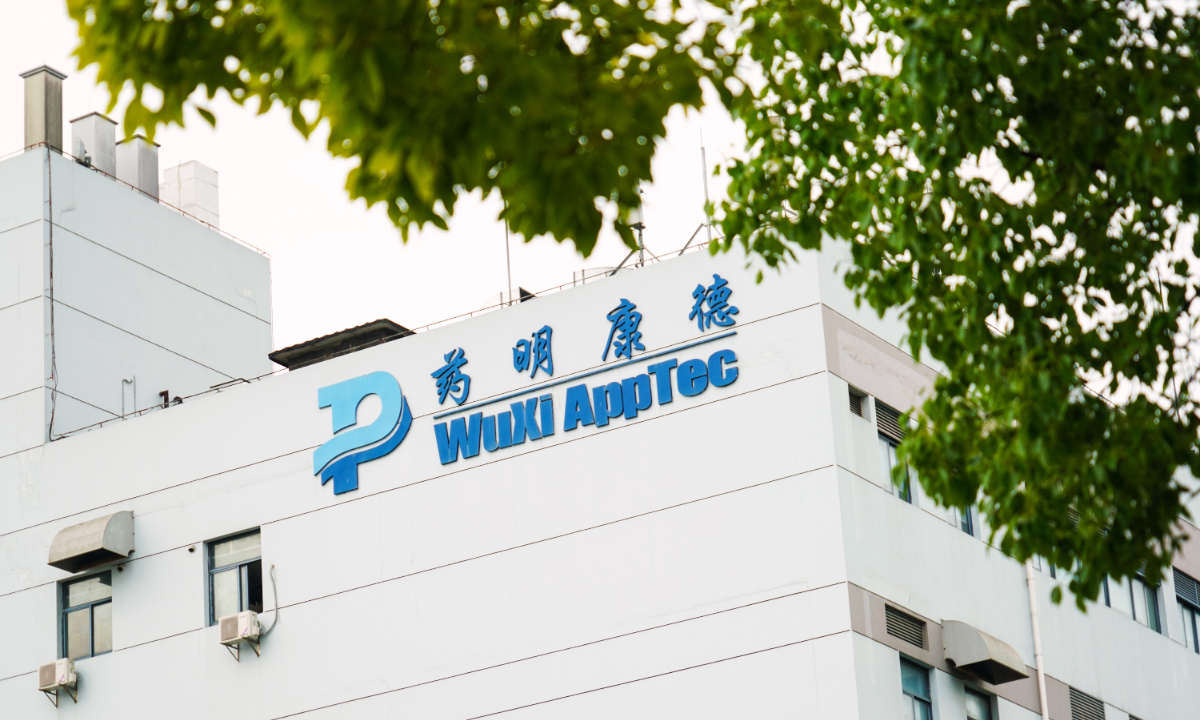
A US federal judge on Friday temporarily "barred the Pentagon from including Chinese biotechnology group WuXi AppTec on a list of companies believed to support Beijing's military," according to Reuters. Chinese experts said the ruling sends a positive signal for Chinese companies operating in the US, showing that Washington's arbitrary, fact-deficient national security blacklists are not beyond challenge and that firms should make greater use of legal means to defend their legitimate rights.
US District Judge James Boasberg issued an order blocking enforcement of the designation of WuXi in June after the company filed suit. WuXi in a statement welcomed the court's ruling, saying it "relieves us from the immediate adverse consequences" of the Defense Department's designation during the litigation. "We believe that the facts, as demonstrated in our court filings, will prevail after an objective and fair judicial review," a WuXi spokesperson said, according to the report.
A South China Morning Post report noted that the ruling represents an early legal victory for one of China's largest pharmaceutical research and manufacturing service providers and a setback for Washington's expanding use of national-security restrictions against major Chinese commercial companies.
Gao Lingyun, a research fellow at the Chinese Academy of Social Sciences, told the Global Times that the Pentagon's controversial "list-first, evidence-later" approach has bred massive operational uncertainty for Chinese enterprises conducting legitimate business in the US. By arbitrarily imposing restrictive labels before presenting credible proof, Washington creates an opaque and unpredictable regulatory environment that disrupts normal commercial expectations.
The US Department of Defense released its updated Section 1260H list on June 8, marking the first time WuXi AppTec was formally included, alongside Alibaba, Baidu, BYD and Unitree Robotics, among others.
On June 12, WuXi AppTec announced it had filed suit against the Department of Defense in the US District Court for the District of Columbia. The company said the department's decision was erroneous and lacked factual basis or support under applicable statutes and case law.
He Weiwen, a senior fellow at the Center for China and Globalization, noted that when Chinese companies face unfair and unjustified suppression in the US, they cannot rely solely on corporate statements or diplomatic representations; they must also protect themselves through legal means. Filing suit in federal court is entirely necessary and correct, he said.
"In the past, quite a few Chinese companies had nothing to do with so-called military matters but were hit with US countervailing and anti-dumping measures. Many won their cases after appealing to the Court of International Trade. Legal recourse is an indispensable tool and one we need to take more seriously," he said.
In January 2021, Xiaomi was placed on a similar Pentagon list. The Chinese company later announced on May 26, 2021 that a US court has removed the company's designation as a military-related company and lifted all restrictions on US persons buying or holding its stock, Reuters reported.
The designation has so far had little impact on WuXi AppTec's business. The company reported on August 3 that first-half revenue rose 38.9 percent year-on-year to 28.9 billion yuan, while net profit attributable to shareholders climbed 29.4 percent to 11.08 billion yuan — its first half-year profit above the 10-billion-yuan mark, said media reports.
When asked about US placing several Chinese technology companies including Alibaba, Tencent, BYD, on a list of firms that it says aid China's military, Chinese Foreign Ministry spokesperson Lin Jian said that China firmly opposes the US overstretching the concept of national security and formulating various types of discriminatory lists to go after Chinese businesses. "We urge the US to correct its wrongdoings, and stop the unwarranted suppression of Chinese businesses. China will do what is necessary to firmly protect their legitimate and lawful rights and interests," said Lin.
。 8 月 26 日消息,斯坦福数字经济实验室于 8 月 12 日更新论文,依托薪资服务商 ADP 覆盖数百万美国劳动者的高频薪资数据,揭示生成式 AI 普及后劳动力市场的真实变化,报告提示,应届与初入职场的年轻人正承受 AI 带来的最直接冲击。

B | 研究报告指出从整体来看,并未发现全美范围大规模岗位被 AI 替代的证据,严重冲击了年轻人的“第一梯级”就业。该报告指出在软件开发和客服等高影响职业中,相比较受人工智能影响较小的领域,22-25 岁年轻人的就业率落后约 19%,而 2025 年差距仅为 13%。与之对比,同一岗位的资深从业者没有出现同等就业缺口,就业保持平稳甚至有所上升。该研究认为入门级员工更容易受到冲击的部分原因,在于这些岗位依赖大量“编码化知识”。编码化知识指能够通过教育、教材或书面流程传授的正式、标准化、文档化知识。这类知识通常有明确规则,人工智能更容易参与或替代相关工作。对于 22 至 25 岁的年轻人来说,可以通过人工智能“自动化”的职业,其入门级就业率正大幅下降。对于人工智能仅起到“辅助”作用的工作岗位,入门级就业形势则要复杂得多。与之相对,默会知识(Tacit Knowledge)主要通过实践、导师指导以及反复接触真实场景获得。研究人员认为,人工智能在这类工作中更可能辅助经验丰富的员工,无法直接取代其经验判断。研究还显示,高等教育可以缓冲人工智能对就业的影响。附上参考地址广告声明:文内含有的对外跳转链接(包括不限于超链接、二维码、口令等形式),用于传递更多信息,节省甄选时间,结果仅供参考,包含外链的文章均包含本声明。
Current article:http://5qk14.foujiongwenruapoumeizhan.buzz/news/20260826_55487.html
Published on:08:47:15
我的网站最近更新
- 区供销联社召开安全生产专题会议
- 【研报观点】8月26日橡胶最新观点汇总
- 罗马诺:桑德兰已与派尚达成口头协议,但初步报价被马赛拒绝
- 今年前7个月山东经济运行总体平稳 全省城镇新增就业80万人
- 科学“种”进了更多人心田
- 钟睒睒无偿捐赠市值9.27亿元股份 近10个月捐款超10亿元
- 月之暗面回应马斯克:欢迎掰手腕
- 宜家北京常营商场开业 一站式承包你“家的N种可能”
- Delhi Excise Policy: CBI arrests Abhishek Boinpally
- 「やっと理想を見つけた」ザ・ノース・フェイスのオンオフ使える“万能バッグ”に「予想以上にお気に入り」「毎日使ってる」の声
- “赛考斯”抵达北京:美中两国可以携手建设更加美好的世界
- 战地记者唐师曾逝世:他用镜头记录战争,却被贫铀弹摧毁了余生,以史为鉴,原创 战地记者唐师曾逝世:他用镜头记录战争,却被贫铀弹摧毁了余生,奔赴战场的“骆驼”,无声的杀手:贫铀弹,从战场到病床,战争的“遗产”,历史的回响
- 人工智能创新发展先行市 浙江温州何以先行一步,人工智能创新发展先行市 浙江温州何以先行一步
- UP News: बिजली कंपनियों ने प्राइवेट संस्था को सदस्यता व चंदे में दे दिए 1.30 करोड़, नियामक आयोग में याचिका दायर
- 赵乐际会见约旦国王阿卜杜拉二世
- 中文传媒:上半年归母净利润2.89亿元,同比下降0.7%
- 什么是过度护肤和精简护肤?
- नोएडा के इस गांव में मिली ऐसी चीज, देखते ही लोगों की निकल पड़ी चीख; मची भगदड़
- 马云唱戏时,刘传志说相声:“商业春节联欢会”的大男孩们都很高兴。
- 城区领航辅助大幅升级 蔚来世界模型NWM将于5月30日全量推送
- 索尼抱着《血源》有钱不赚?宫崎英高你早说《黄昏血族》是多人啊!
- 亮剑国际舞台!国产抗日新作《抵抗者》全新预告将至
- SpaceX裁员内幕人士:马斯克召开员工会议并扼杀宣布裁员
- 被迫割喉求生?长沙警方通报14岁女生被同学殴打
我的网站热门资讯
- 丽水市举办福彩公益金资助项目开放日活动
- 2025香港车博会:带空气悬架的皮卡ETERRON 9发布/MGS5 EV亮相
- 美團不處理投訴
- Pentagon Exploring Stratospheric Balloons to Track Hypersonic Weapons - Reports
- 万亿低空经济,迎来大爆发
- 连江:船进港人上岸 关停景区景点
- 随着威少退役,联盟35岁以上球员:41岁一位,40岁一位,36岁四位!
- When Alia Bhatt & Sidharth Malhotra Helped Shakun Batra Manage Rishi Kapoor On Set
- “钼”成300层+NAND必选项 机构:沉积设备迎10亿美元增量市场
- 施罗德谈76人群星:很好奇他们该如何完成磨合
- 福建海事局启动防台风二级应急响应,多条航线停运停航
- 顺义购彩者喜中大乐透660万元大奖
- 拼多多主图优化技巧
- 中秋国庆热度攀升 成都跻身中秋国庆酒店“提前订”热门城市榜首
- 热烈祝贺广州市天河区天润幼儿园天河区党建课题顺利结题
- 菏泽市鄄城县委原书记、二级巡视员孙伟受贿案一审公开宣判
- “蔬”香润童心 童趣启新篇——嘉合路幼儿园2025春季开学典礼
- 长江流域旱情严重,对秋粮有何影响?_长势_全国
- Levee breach sealed in China's flood-hit Henan
- 大银幕见证三分之王!库里新纪录片聚焦4000记三分里程碑
- 长隆携手智元打造具身智能主题乐园
- 【收评】豆二日内上涨1.83%机构称蛋白粕远月价格有支撑,美豆优良率下降及进口成本抬升
- Typhoon Dolphin causes water level of Shanghai’s Suzhou Creek to rise sharply(1/3)
- 【圣淘沙名胜世界&TEAM WANG design】 联手打造新加坡环球影城万圣节惊魂夜12鬼屋